
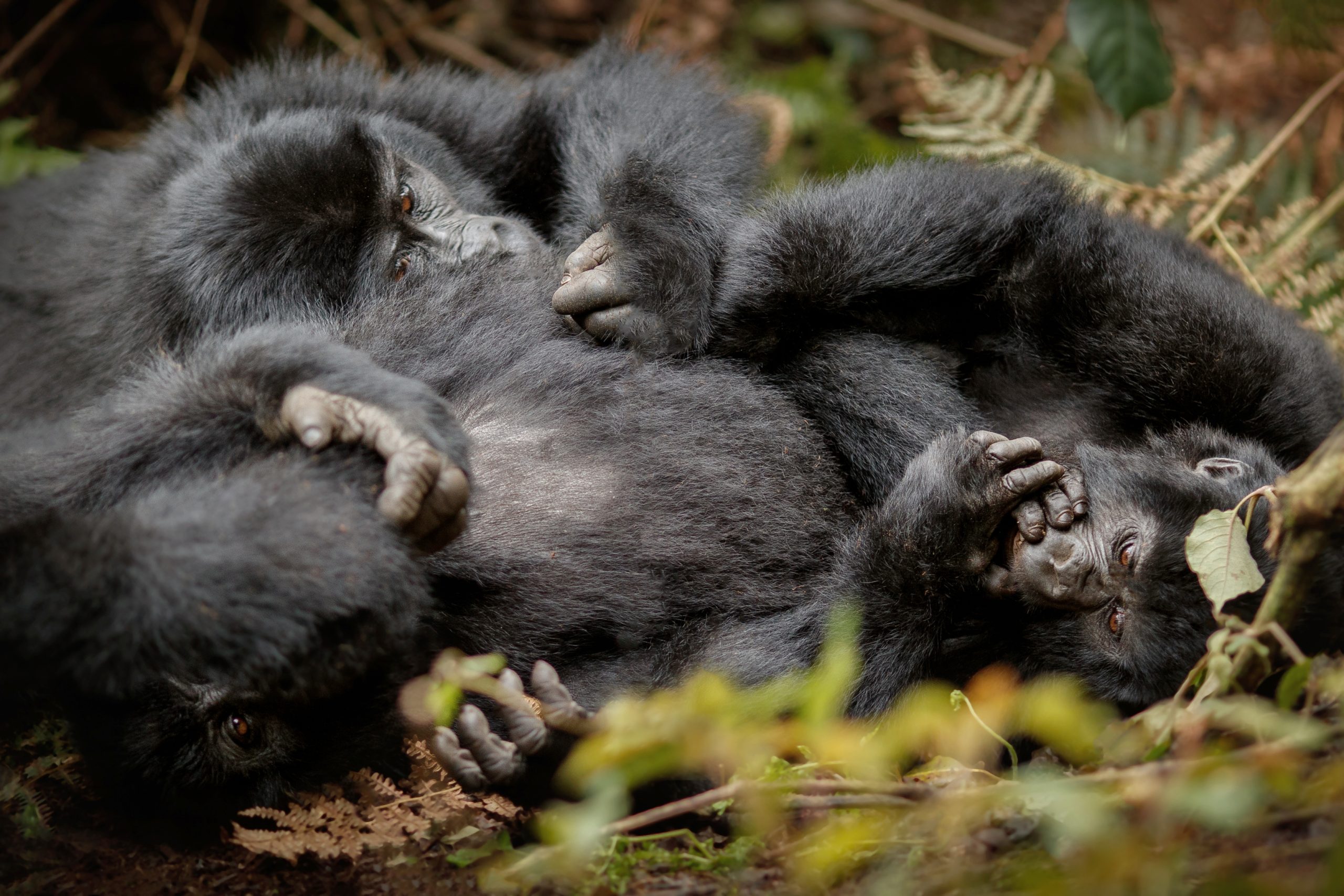
Susa Gorilla Family
Susa Gorilla Family; A silverback, before becoming a familiar name, and a newborn, before receiving its own identity, are both part of a family whose history extends beyond a single sighting. Few families in Rwanda show this continuity as clearly as Susa’s.
They are the Susa gorilla family, known for its famous twins and for giving rise to several other families. Its history explains why gorilla families in Rwanda cannot be reduced to fixed names on a trekking list.
Susa is a fascinating place for travelers interested in conservation and family relationships. If you’re lucky enough to get a visit, it means more when you know the generations and changes behind the gorillas you see.
What is it, Susa?
The family takes its name from the Susa River, associated with its forest home.
It is sometimes called the original Susa group to distinguish it from families that developed through later divisions. Those related groups have their identities and should not be counted as one family today.
History and Formation
Conservation records indicate that Susa was founded in 1974 with seven individuals. Then it grew into a large family, but later separations changed the composition.
The wider Susa lineage was a contribution to the development of Karisimbi and Igisha. Later, Isimbi emerged from the Karisimbi branch.
These were gradual changes. But it would be wrong to say that all the resulting families came into being at once.
Who Is the Leading Silverback?
The January 2024 conservation profile identified Impuzamahanga as the dominant leader after Kurira left the group in May 2020.
Older descriptions may continue to associate Susa with previous leaders. Always distinguish between historical significance and current leadership.
Susa Family Composition and Famous Twins
The group has 15 members as of 31 January 2024:
- Three silverbacks.
- Three adult females.
- Two blackbacks.
- Two subadults.
- Two juveniles.
- Three infants.
These figures describe a historical snapshot.
Susa is especially famous for twins Impano and Byishimo, born in 2004. A further twin birth occurred in 2011. Such births make its maternal history remarkable, but they do not prove that Susa currently has the highest infant count.
Where Does the Susa Gorilla Family Live?
Susa is linked to the Karisimbi landscape of Volcanoes National Park.
Visitors are directed by the family’s feeding movements. A historic ranging area is a helpful background, but it is not an exact spot where the gorillas will remain.
How’s the walk?”
To get to Susa, you must walk uphill, on slippery ground, through dense vegetation. The altitude and the movements of the gorillas can make the walk more challenging.
Share your fitness and walking experience with your planner. Wear appropriate footwear, carry rain gear, and discuss porterage where appropriate.
Visitors can see the family once it is found, with adults feeding, people resting, or young ones playing. A quiet meeting is no less valuable than an active one.

Susa Gorilla Family
Summary
The Susa gorilla family occupies an important place in Rwanda’s mountain gorilla history. Its famous twins and influence on the formation of other groups make it an especially rewarding subject for travelers who want more than a photograph.
However, do not confuse its former size and celebrated births with its current membership or guaranteed sightings. The most rewarding approach combines historical understanding with realistic expectations about a wild encounter.
Planning a trip to Rwanda? Reach us on info@entaleafricansafaris.com , Tell us your dates, group size, budget, and walking preferences, and we will prepare a tailor-made itinerary including gorilla permits, accommodation, and private transport.

Entale Africsn Safaris
Sharing travel inspiration, destination knowledge and practical tips for exploring East Africa.