Nyungwe Forest National Park
Nyungwe Forest National Park covers about 1,019 square kilometres in south-western Rwanda. It is one of the oldest and best-preserved montane rainforests in Africa. Its forested ridges and valleys run along the Congo-Nile Divide and continue across the border into Burundi’s Kibira National Park, forming one of the largest blocks of mountain forest in East Africa.
Rain falling on one side of Nyungwe flows toward the Nile, while rain on the other side drains to the Congo. In 2023, UNESCO listed the park as a World Heritage Site in recognition of its remarkable biodiversity.
Nyungwe is Rwanda’s primate capital, with 13 species recorded, including chimpanzees, L’Hoest’s monkeys, grey-cheeked mangabeys and large troops of Rwenzori colobus that can number in the hundreds. Birders come for more than 300 species, many found only in the Albertine Rift. Botanists know the forest for its giant tree ferns, ancient mahogany and more than 1,000 plant species, including well over 100 kinds of orchids.
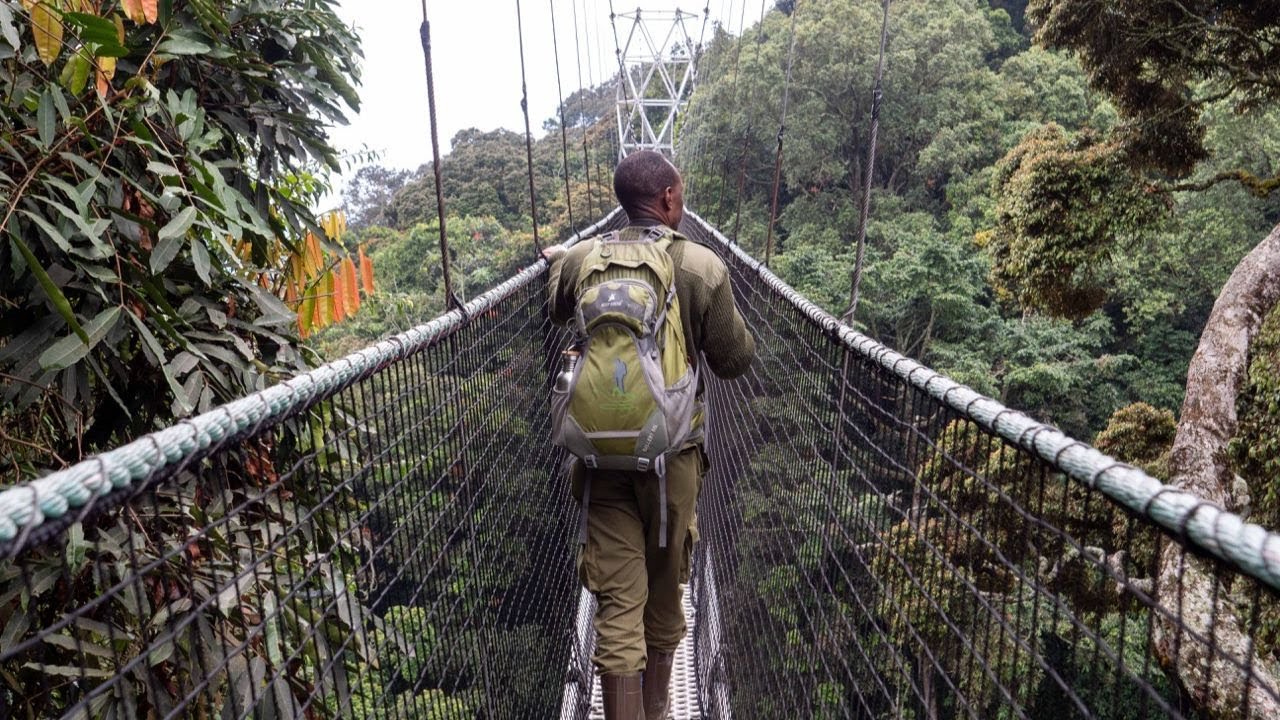
Chimpanzee tracking is the main activity, either in the main forest or in the small Cyamudongo forest nearby. The canopy walkway at Uwinka is a close second, a suspension bridge that takes you high above the forest floor with views across endless green hills. Guided hikes to the Isumo waterfall, colobus tracking and birding walks round out a stay.
Nyungwe is about 5 to 6 hours’ drive from Kigali, or a short domestic flight to Kamembe. It pairs naturally with Lake Kivu and Volcanoes National Park on a longer Rwanda itinerary. Two or three nights here suit travellers who want primates beyond gorillas, forest hiking with real variety, and a cool, green break from the savannah. Accommodation ranges from simple guesthouses to one of Rwanda’s most refined luxury lodges, set in a tea plantation on the edge of the forest.
Where is Nyungwe National Park located?
Nyungwe National Park occupies a large area of southwestern Rwanda, close to the border with Burundi and the Lake Kivu region. The main access corridor passes through the forest between the towns of Huye and Rusizi, with visitor activities departing from designated reception points such as Uwinka and Gisakura. From Kigali, the drive commonly takes around five to seven hours, depending on the chosen entrance, road conditions and stops along the way.
Many visitors break the journey with a stop in Huye or combine Nyungwe with Lake Kivu. Staying near the forest edge makes early starts easier, especially for chimpanzee tracking, which can begin before sunrise.
Top attractions and what to see
Chimpanzees and forest primates
Nyungwe is home to chimpanzees and a remarkable range of monkeys, including colobus monkeys that sometimes travel in strikingly large groups. These animals are wild and move freely, so tracking can be demanding and sightings are never guaranteed.
The canopy walkway
Suspended high above a forest valley, the canopy walkway offers an unusual perspective on the treetops. The combination of height, mist and sweeping views makes it memorable, although visitors uncomfortable with heights may prefer ground-level trails.
Waterfalls and ancient forest
Trails lead through lush vegetation to viewpoints and waterfalls, including the popular Isumo waterfall route. Ferns, orchids and moss-covered trees make even an ordinary forest walk feel special.
Birdlife and tea-growing landscapes
Nyungwe is a major destination for Albertine Rift birdwatching, with sought-after forest species and plenty of opportunities for guided birding. The surrounding tea estates add another beautiful layer to the scenery and can be included in locally arranged visits.
Best activities and experiences
Chimpanzee tracking
Guided chimpanzee tracking is one of Nyungwe’s signature experiences. It involves an early start and may require walking across steep, wet forest terrain. The reward is the possibility of observing chimpanzees feeding, calling and interacting in their natural environment.
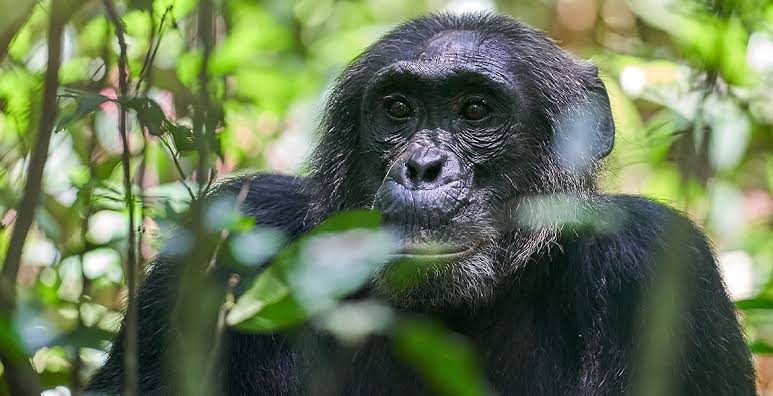
Nyungwe Chimpanzee
Canopy walk
The canopy walk is a memorable addition to a forest itinerary, particularly for travelers interested in scenery and photography. It is a guided activity and is subject to weather and operational conditions.
Waterfall and forest hikes
Choose from guided trails suited to different levels of fitness, from shorter forest walks to longer waterfall hikes. A knowledgeable guide adds depth by pointing out plants, bird calls and the ecological relationships that are easy to miss.
Birdwatching and colobus tracking
Dedicated birdwatchers may want more than one morning in the forest. Colobus monkey tracking is another rewarding option for visitors who enjoy primates but want a different experience from chimpanzee tracking.
Best time to visit
Nyungwe is a rainforest, and showers can occur at any time. June to September and December to February are generally more comfortable for walking, though conditions remain variable. Rainier months often produce exceptionally green landscapes and atmospheric photographs, but some trails become muddy and challenging.
A two- or three-night stay gives travelers enough flexibility to include chimpanzee tracking, the canopy walkway and a longer hike. Birdwatchers and keen walkers may want additional time, particularly if weather affects the daily plan.
Frequently asked questions
What is Nyungwe National Park famous for?
Nyungwe is known for its montane rainforest, chimpanzees, colobus monkeys, canopy walkway, hiking trails and rich birdlife.
Can you see gorillas in Nyungwe?
No. Rwanda’s mountain gorilla trekking takes place in Volcanoes National Park; Nyungwe is primarily a chimpanzee and forest experience.
Is the Nyungwe canopy walk suitable for everyone?
The walk involves suspended bridges at height and access via a forest trail. Visitors should consider mobility, fitness and comfort with heights before booking.
How long should I stay in Nyungwe?
Two to three nights works well for a first visit, while a longer stay is ideal for birdwatchers and hikers.
Plan your Rwanda journey
Nyungwe invites you to slow down and listen to the forest. Entale African Safaris can help you build a Rwanda itinerary that gives this remarkable landscape the time it deserves, with a thoughtful balance of chimpanzee tracking, guided walks, comfortable stays and onward travel to Lake Kivu or Kigali.

 Rwanda