
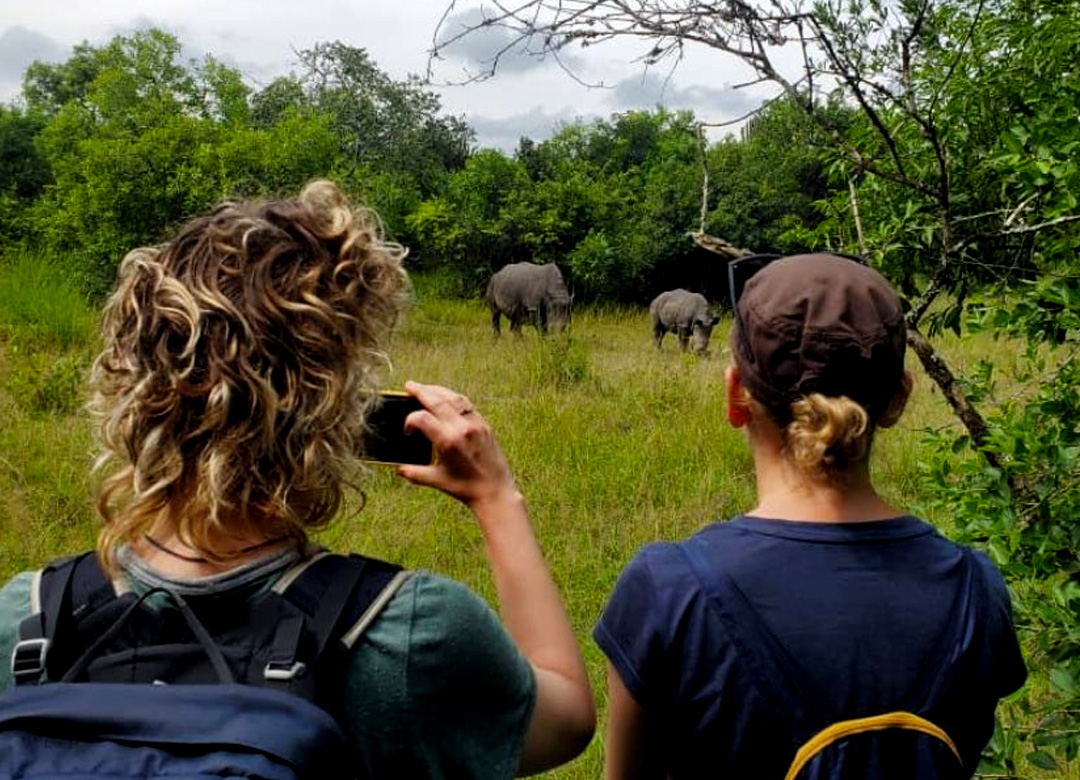
Compared to a traditional game drive, walking safaris in East Africa let you connect more closely with local tales, wildlife, and scenery. You slow down and experience the wilderness step by step instead of seeing it all from the window of your car.
Suddenly, every movement in the grass, animal track, bird call, and footprint counts. Even the smallest details can tell intriguing tales about how wildlife survives when a knowledgeable guide or ranger leads the way.
East Africa offers amazing places to explore on foot, from the zebra-filled savanna of Uganda to the ancient forests of Rwanda and the untamed landscapes of Tanzania. These seven walking safari experiences are worth including in your trip to Africa.
1. Lake Mburo Walking Safari, Uganda
A Lake Mburo walking safari is one of the most exciting ways to experience Uganda’s wildlife at ground level. The national park combines rolling hills, open savannah, woodland, rocky outcrops, and wetlands.
Walking with an experienced guide allows you to search for zebras, impalas, elands, warthogs, waterbucks, and other wildlife. Instead of rushing between sightings, you learn to notice tracks, plants, birds, insects, and signs animals leave behind.
Lake Mburo works especially well for travelers who want to combine a traditional game drive with something more active. Its location also makes it a useful addition to itineraries connecting Kampala or Entebbe with southwestern Uganda.
For an even richer experience, you can combine your walk with a boat safari, game drive, cycling experience, or horseback safari.
Why it can feel life-changing: You stop being a passenger and start paying attention to how the entire ecosystem works around you.
2. Rhino Tracking on Foot in Ziwa, Uganda
Few experiences can prepare you for seeing a rhino while standing on your own two feet.
Guided rhino tracking at Ziwa allows visitors to approach the experience differently than traditional vehicle-based wildlife viewing. You carefully listen to your ranger’s instructions while learning about rhino behavior and conservation.
The experience can be incorporated into a northern Uganda safari, especially if traveling to Murchison Falls National Park.
It also incorporates an important conservation story into your journey. Rather than simply photographing wildlife, you gain an understanding of the work required to protect threatened species.
Why it can feel life-changing: Seeing such a powerful animal from the ground alters your perception of scale and respect for wildlife.
3. Guided Walks in Loita Hills, Kenya
A guided walk in the Loita Hills takes you beyond the usual safari experience. Here, you explore rolling hills, forests, open grasslands, and traditional Maasai landscapes on foot, accompanied by a knowledgeable local guide.
The experience feels calm, personal, and refreshingly slow. Instead of watching the landscape through a vehicle window, you hear birds, notice animal tracks, feel the changing terrain, and enjoy uninterrupted views across the hills. Your guide brings the journey to life by explaining local plants, wildlife signs, traditional practices, and the Maasai connection to the land.
Walking also creates opportunities to interact respectfully with local communities and understand everyday life around Loita. It is especially rewarding after a long international flight, giving you time to stretch, breathe fresh air, and settle naturally into your Kenyan safari.
Why it can feel life-changing: Loita Hills encourages you to slow down and experience Kenya through its landscapes, people, and stories. It is an excellent way to begin your safari before continuing to the Maasai Mara.
4. Tarangire Walking Safari, Tanzania
Tarangire is famous for elephants, baobab trees, and beautiful seasonal landscapes. However, exploring parts of this environment on foot can reveal another side of the park.
Authorized walking activities are accompanied by rangers, and visitors must follow park regulations and instructions.
A guided walk can shift your attention from simply finding large animals toward understanding tracks, vegetation, insects, birds, animal behavior, and the relationships between different species.
The enormous baobabs also give Tarangire a distinctive atmosphere. Walking through such landscapes can make you appreciate their scale differently than you would from inside a safari vehicle.
A Tarangire walking experience can easily complement game drives before continuing toward Ngorongoro or Serengeti.
Why it’s life-changing: It proves that an African safari is not only about how many animals you shoot but how well you know the landscape.
5. Ngorongoro Highlands Walking Safari, Tanzania
The Ngorongoro region offers much more than descending into the famous crater for a game drive.
Walking experiences through the surrounding highlands introduce you to dramatic volcanic landscapes, grasslands, communities, and expansive views. Depending on the route and itinerary, walks can vary considerably in length and difficulty.
This is an excellent option for travelers who want to combine wildlife with scenery, physical activity, and cultural encounters.
After several days inside safari vehicles, stretching your legs in Tanzania’s highlands can also change the rhythm of your journey. You have time to observe, ask questions, photograph landscapes, and appreciate details that disappear when traveling quickly.
Why it can feel life-changing: The experience connects wildlife, landscapes, people, and your own sense of adventure.
6. Nyungwe Forest Walking Experience in Rwanda.
Not every walking safari in East Africa has to take place on open savanna.
Nyungwe provides an entirely different environment. The experience involves walking through a diverse forest ecosystem teeming with birds, primates, towering trees, and dense vegetation.
The slower pace causes you to notice sounds before sightings. A branch moving above you, a distant primate call, or birds calling through the canopy can suddenly become the focus of your attention.
Nyungwe can also be incorporated into a wider Rwanda journey that combines forest adventures with Lake Kivu and Volcanoes National Park. Rwanda promotes hiking across its western landscapes, from Volcanoes National Park toward Lake Kivu and Nyungwe.
Why it can feel life-changing: The forest encourages you to slow down, listen carefully, and appreciate wildlife beyond Africa’s famous large mammals.
7. Volcanoes National Park Hiking Experience, Rwanda
If you want your East African walking adventure to include mountains, forests, wildlife, and extraordinary scenery, consider Volcanoes National Park.
The park protects part of the Virunga Massif and includes montane ecosystems ranging from bamboo forest to grassland and heath.
Beyond its famous mountain gorillas, the area offers several hiking opportunities. Rwanda’s official hiking information highlights options including Lake Ngezi and other trails in the Volcanoes region, with guides and permits required for protected-area hikes.
You can combine hiking with gorilla trekking, golden monkey tracking, cultural experiences, or time around the wider Musanze area.
Why it can feel life-changing: Few journeys combine volcanic landscapes, rainforest, conservation, physical challenge, and primate country so naturally.
Why Choose a Walking Safari in East Africa?
A walking safari changes the pace of your African holiday.
Game drives remain one of the best ways to cover large distances and search for iconic wildlife. Walking adds something different. You begin noticing footprints, plants, insects, bird calls, smells, and subtle changes in the landscape.
Most importantly, your guide becomes an interpreter of the wilderness rather than simply someone helping you find animals.
Walking also creates memorable contrasts within a longer itinerary. One morning you could photograph wildlife from a safari vehicle. The next, you could follow tracks with a guide or walk through a forest listening for primates.
Are Walking Safaris in East Africa Safe?
Walking safaris in East Africa are generally conducted under strict guiding and park procedures, but wildlife encounters are never without risk.
Always use authorized guides or rangers and adhere to their instructions. Regulations in areas with potentially dangerous wildlife can be particularly strict. According to Tanzania’s Tarangire guidance, authorized rangers must accompany walking activities.
Never approach wildlife just because it appears calm. Your guide determines where you walk, when you stop, and how close the group should get.
What Should You Pack for an East African Walking Safari?
Keep your packing light, practical, and suitable for changing outdoor conditions.
- Comfortable walking or hiking shoes
- Lightweight, breathable clothing
- Long trousers for bush and forest walks
- Light rain jacket or poncho
- Sun hat and sunglasses
- Sunscreen
- Insect repellent
- Reusable drinking water bottle
- Small comfortable daypack
- Binoculars for wildlife and birdwatching
- Camera or smartphone
- Warm layer for cool mornings
For higher-altitude or forest walks, pack an extra warm layer and waterproof protection. Your safari guide can also advise you based on the destination and season.
Your exact packing list should match the destination, season, altitude, and difficulty of your chosen walk.
When Is the Best Time for Walking Safaris in East Africa?
There is no single ideal month for a walking safari in East Africa.
Conditions differ between Uganda, Rwanda, Kenya, and Tanzania. Rainfall, vegetation, wildlife movement, and park regulations all have an impact on savanna walking experiences. Forest and mountain experiences require different considerations, such as trail conditions and altitude.
This is why your route should be designed around what you actually want to experience rather than simply choosing a popular safari month.
Can You Combine Walking Safaris, Gorilla Trekking, and Game Drives?
Yes. Combining walking safaris with gorilla trekking and traditional game drives can result in a more diverse East African safari.
For example, you could walk around Lake Mburo before heading to Uganda’s gorilla country. Another itinerary could link Kenya’s Maasai Mara to Tanzania’s northern safari circuit.
Travelers interested in primates and hiking can combine Uganda and Rwanda. Rwanda’s Volcanoes National Park alone provides gorilla tracking, hiking, and other outdoor activities.
Rather than repeating the same safari experience every day, this itinerary allows you to see East Africa from different perspectives.
Plan your East Africa walking safari with Entale African Safaris.
A memorable walking safari starts with choosing the right destination, guide, season, accommodation, and level of activity.
Entale African Safaris can design a tailor-made journey combining walking experiences with gorilla trekking, chimpanzee trekking, game drives, cultural encounters, boat safaris, and relaxing lodge stays across East Africa.
Whether you want Uganda’s Lake Mburo, Kenya’s greater Mara ecosystem, Tanzania’s wilderness, or Rwanda’s volcanic and forest landscapes, your itinerary can be built around your pace and interests.
Conclusion
The best walking safaris in East Africa go beyond just seeing wildlife. Lake Mburo, Ziwa, the Maasai Mara ecosystem, Tarangire, the Ngorongoro Highlands, Nyungwe, and Volcanoes National Park all provide unique reasons to leave the vehicle behind.
Walk slowly, listen carefully, and let your guide introduce you to the details that most visitors overlook. When combined with game drives, primate trekking, cultural experiences, and carefully selected lodges, a walking safari can become one of the most memorable aspects of your East African adventure.