
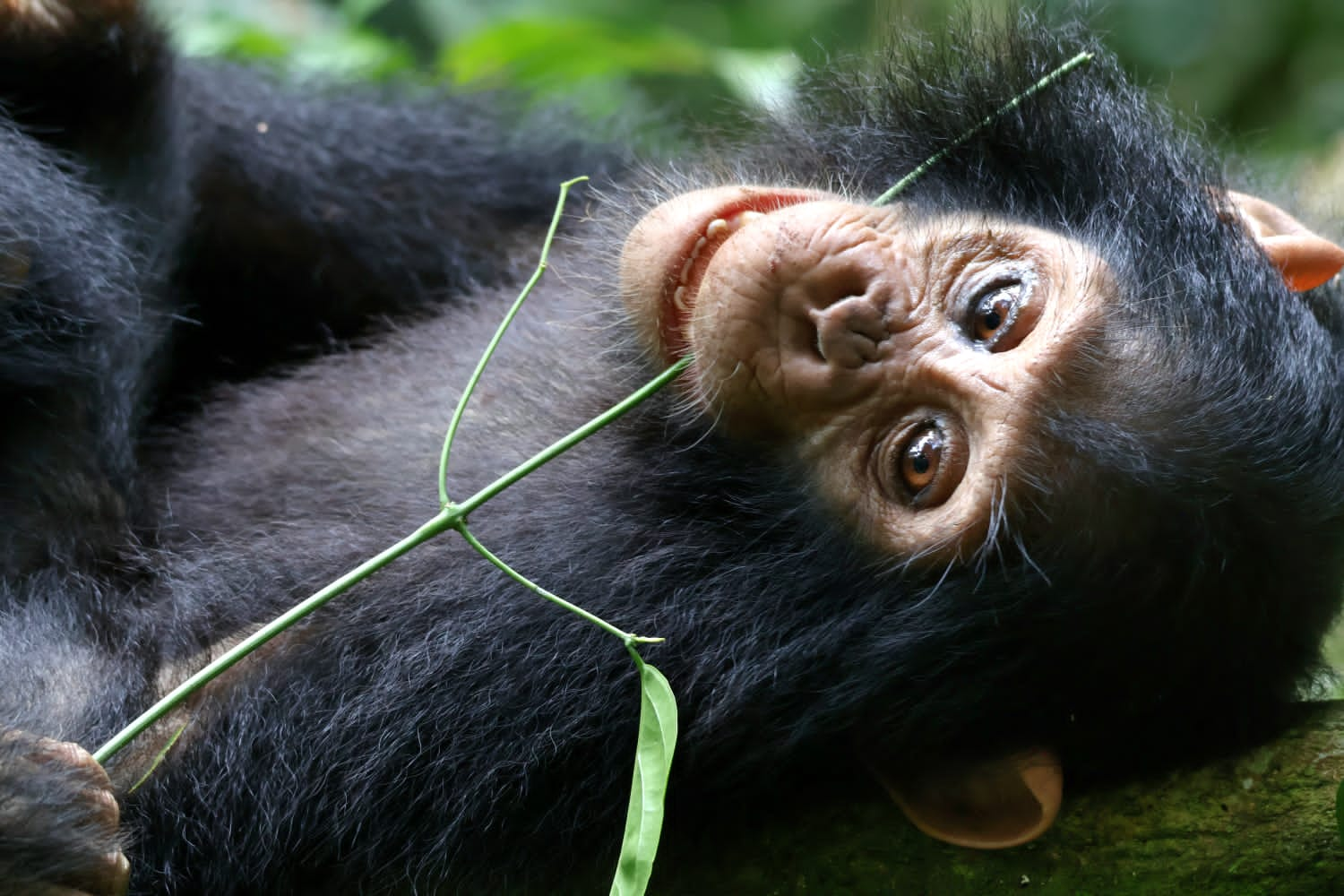
Yes, you can see chimpanzees in Burundi, particularly in Kibira National Park, a vast montane rainforest in northwestern Burundi. The park protects chimpanzees alongside several other primates and around 200 bird species, making it one of the country’s most remarkable wildlife destinations.
For travellers looking beyond Uganda and Rwanda, chimpanzee trekking in Burundi offers a quieter, less commercialised forest adventure. Kibira combines primate encounters, rainforest walks, birdwatching, and beautiful highland scenery in one destination.
Where Can You See Chimpanzees in Burundi?
The main destination for seeing chimpanzees in Burundi is Kibira National Park. Covering approximately 40,000 hectares, the park stretches across the Congo-Nile Divide and protects one of Burundi’s most important montane rainforest ecosystems.
Kibira is home to the eastern chimpanzee (Pan troglodytes schweinfurthii), as well as blue monkeys, L’Hoest’s monkeys, black-and-white colobus, and other primates. UNESCO’s description of Kibira notes that chimpanzees occur across the forest’s different blocks.
What Is Chimpanzee Trekking in Burundi Like?
Chimpanzee trekking in Burundi is best approached as a wild forest experience rather than expecting the highly developed primate-tourism infrastructure found elsewhere in the region. Visitors explore Kibira with guides, walking through thick vegetation while looking and listening for signs of primates.
Chimpanzee sightings should never be treated as guaranteed. Their movements depend on food, weather, location, and other natural factors, so the forest itself remains an important part of the experience.
What Makes Kibira Special?
Kibira offers much more than chimpanzees. Its relative remoteness makes it particularly appealing to travelers seeking less-crowded nature experiences.
During a visit, you may experience:
- Chimpanzees and other forest primates
- Guided rainforest walks
- Around 200 recorded bird species
- Beautiful mountain and forest scenery
- Teza and Rwegura tea plantations
- Streams and rivers originating within the forest
- Views around the Rwegura hydroelectric dam
Burundi’s tourism authorities identify two access points through Busekera and Rwegura and describe guided excursions into the forest.
What Other Wildlife Lives in Kibira National Park?
Chimpanzees may receive much of the attention, but Kibira supports impressive biodiversity. The park is home to around 98 mammal species and approximately ten primate species.
Other wildlife includes blue monkeys, black-and-white colobus, baboons, bushbuck, duikers, civets, and several smaller forest mammals. For bird lovers, the forest’s roughly 200 recorded bird species add another reason to spend time exploring Kibira.
How Do You Get to Kibira National Park?
Kibira National Park lies in northwestern Burundi, along the Congo-Nile watershed. Travellers can approach the forest by road, passing through scenic highland areas and tea-growing landscapes.
The journey itself can become part of your Burundi experience. Tea plantations around Teza and Rwegura create beautiful scenery on the approach to the forest. But Entale can relieve you of the burden by simply planning a thrilling adventure for you at your convenience.
Can You Combine Burundi Chimpanzees With Rwanda?
Yes. A Burundi and Rwanda safari can work particularly well for travelers who want to experience different sides of East Africa within one journey.
You could combine:
- Kibira National Park in Burundi
- Gishora Royal Drummers
- Burundi’s Source of the Nile experience
- Lake Tanganyika and Bujumbura
- Kigali city experiences
- Akagera National Park
- Volcanoes National Park
You can take this further by adding Uganda gorilla trekking in Bwindi, creating one journey combining gorillas, chimpanzees, golden monkeys, savannah wildlife, and cultural experiences across Uganda, Rwanda, and Burundi.
Is Chimpanzee Trekking in Burundi Worth Adding to a Safari?
For travellers who enjoy lesser-known destinations, chimpanzee trekking in Burundi can add something new to an East African itinerary. Kibira offers more than just cultural attractions in Burundi; it introduces you to the country’s rainforest and primate diversity.
It is particularly suitable for adventurous travellers, photographers, birdwatchers, primate enthusiasts, and returning African travellers looking for somewhere less familiar.
What Should You Pack for Kibira National Park?
Forest conditions can be wet, cool, and muddy, so practical trekking equipment is important. Consider carrying:
- Comfortable waterproof hiking boots
- Long trousers
- Long-sleeved shirts
- Lightweight rain jacket
- Small backpack
- Drinking water
- Insect repellent
- Binoculars
- Camera with weather protection
Because visitor arrangements can change, confirm current park access, guide arrangements, and chimpanzee-tracking availability before travelling.
Conclusion
Yes, you can see chimpanzees in Burundi, and Kibira National Park is the country’s standout destination for travelers interested in these primates. Beyond chimpanzees, the park offers rich birdlife, other monkeys, rainforest walks, tea-country scenery, and a quieter side of East African nature.
Adding chimpanzee trekking in Burundi to a Rwanda or Uganda safari can turn a familiar primate itinerary into a more diverse three-country adventure. Combine Kibira with Burundi’s Royal Drummers and Source of the Nile, Rwanda’s Akagera and Volcanoes, and Uganda’s Bwindi for a journey filled with wildlife, culture, and unforgettable landscapes. Contact us today at info@entaleafricansafaris to plan your thrilling East African adventure.