
Semuliki National Park Semuliki National Park covers about 220 square kilometres in the Bundibugyo district of far-western Uganda, on the floor of the Albertine Rift between the Rwenzori Mountains and the Semliki River. It is the eastern edge of the…
Semuliki National Park covers about 220 square kilometres in the Bundibugyo district of far-western Uganda, on the floor of the Albertine Rift between the Rwenzori Mountains and the Semliki River. It is the eastern edge of the vast Ituri Forest of the Congo Basin, and it protects the only true lowland tropical rainforest in East Africa.
Crossing the Rwenzoris from Fort Portal, the road drops into a different world: hot, humid and green, with plants, birds and animals more typical of Central Africa than of the savannahs to the east.
Semuliki is one of Africa’s top birding destinations. More than 440 species have been recorded, including many Congo Basin specialists found nowhere else in East Africa. Highlights include up to nine species of hornbill, the Nkulengu rail, the Congo serpent eagle and the red-billed dwarf hornbill. Mammals are harder to see in the dense forest, but they include forest elephant, buffalo, water chevrotain, pygmy antelopes, flying squirrels and primates such as De Brazza’s monkey.
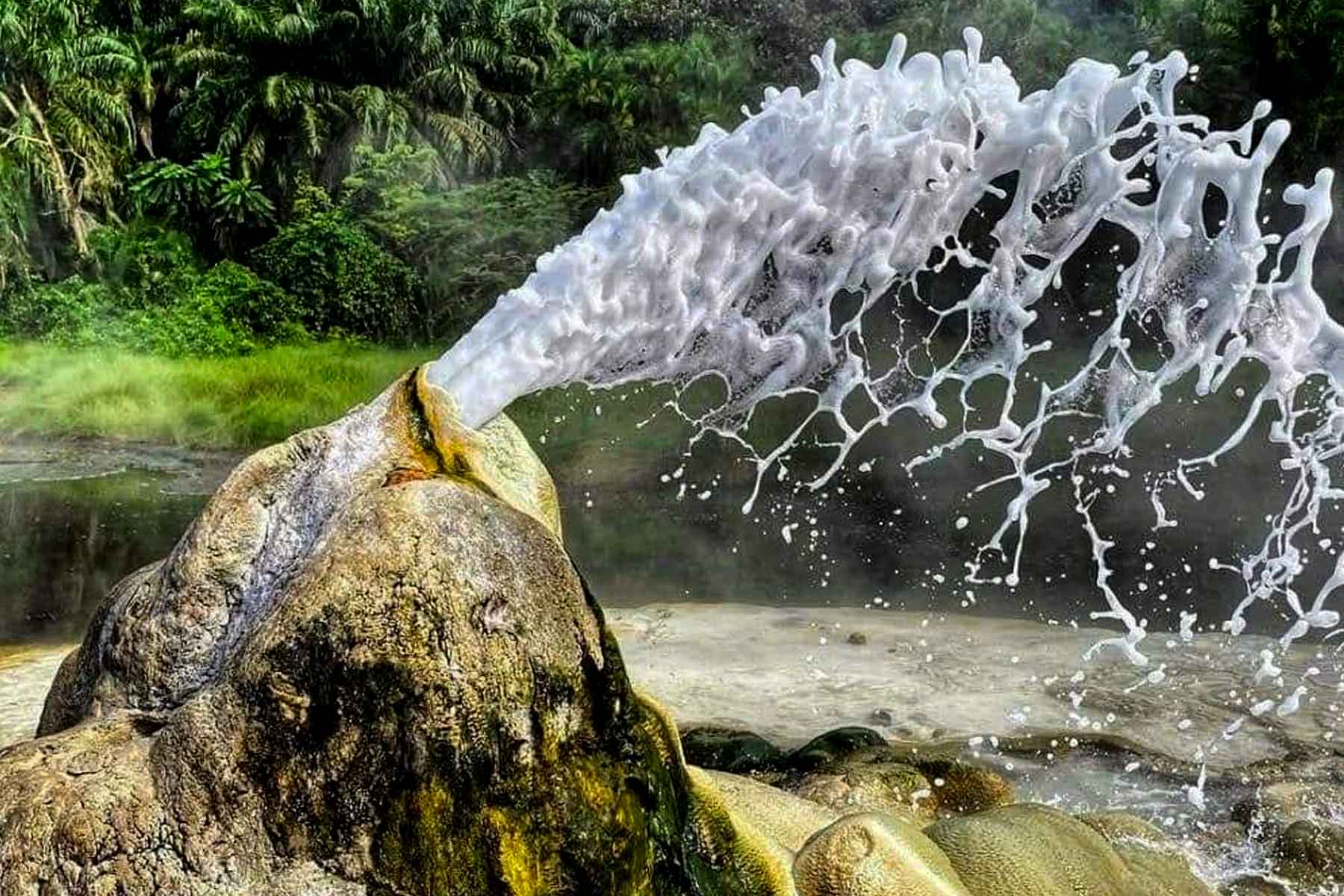
The park’s most famous attraction is the Sempaya hot springs. The “male” spring, Bitente, bubbles in a swampy clearing, while the “female” spring, Nyasimbi, boils at about 100°C, hot enough to cook eggs, which guides often demonstrate. Forest walks, birding trails along the Kirumia River and visits to the Batwa community add to the experience.
Semuliki is about 1.5 to 2 hours’ drive from Fort Portal, so it is an easy one- or two-day add-on to Kibale Forest. Many travellers combine it with the neighbouring Toro-Semliki Wildlife Reserve, where savannah, chimpanzees and boat trips on Lake Albert offer a chance of the shoebill. Semuliki suits keen birders, nature lovers and travellers who want to explore a corner of Uganda few visitors reach.
Semuliki National Park is located in Bundibugyo District in western Uganda, near the Democratic Republic of Congo border. Covering about 220 square kilometres, it protects lowland rainforest with strong ecological connections to the Congo Basin. Visitors commonly travel via Fort Portal, then continue toward the park along the Bundibugyo road.
The park’s best-known attraction is the Sempaya geothermal area, including the springs commonly called Nyansimbi and Bintente. Steam and bubbling water make an impressive sight, but the water is dangerously hot and visitors must stay in designated areas.
Dense forest shelters diverse plants, insects and primates, although sightings can be challenging in thick vegetation.
Semuliki is particularly exciting for birders interested in species associated with the Guinea–Congo forest region.
Follow an authorised guide to the Sempaya viewing areas and learn about the geothermal landscape without approaching unsafe water.

Nature walks in Semuliki National Park
Walking trails reveal the forest’s smaller details, from unusual plants to birds that reward patient listening and observation.
Semuliki combines well with Fort Portal, Kibale and the Rwenzori foothills for a varied western Uganda journey.
The park can be visited year-round, although relatively drier months such as June to August and December to February often make walking easier. Semuliki is humid and rainfall is possible at any time, so sturdy footwear and light rain protection are useful. One or two days is sufficient for many visitors, while dedicated birders may want longer.
No. The water can be extremely hot and is unsafe for swimming.
No. They are separate protected areas with different landscapes and visitor experiences.
Whether you are planning a short escape or weaving this park into a longer Uganda itinerary, Entale African Safaris can help shape the experience around your interests, preferred pace and travel dates. The best journeys leave room for unexpected moments as well as the highlights you came to see.

