
Gorilla Families in Rwanda: Meet the Groups of Volcanoes National Park
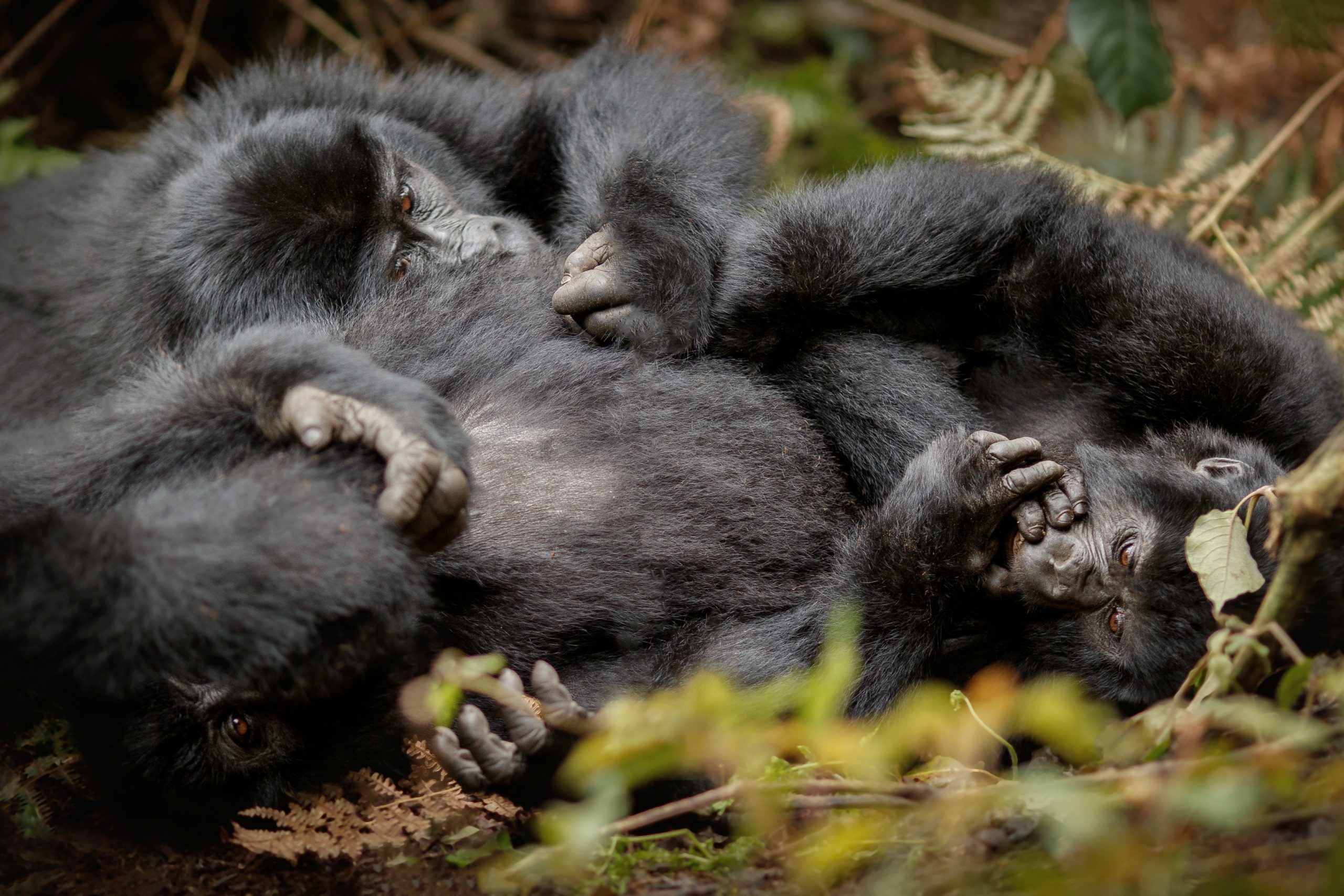
The family feeds around a silverback seated in the vegetation. A young boy tests a nearby branch, while an infant stays close to its mother. This is what makes gorilla trekking so special—not just seeing an endangered animal but watching a family go about their life.
Every gorilla family in Rwanda has its story. Some are connected with celebrity twins, others with powerful silverbacks, or with cross-border journeys. Some formed when large groups split off and created new families that still share histories.
Such background knowledge makes your visit more meaningful. This guide introduces 12 gorilla families of Volcanoes National Park, explains how they differ, and helps you plan a trekking experience with realistic expectations.
Where to see gorilla families in Rwanda?
Mountain gorilla trekking in Rwanda takes place in Volcanoes National Park, located in the country’s northwest near Musanze and Kinigi.
The park is part of the larger Virunga landscape shared by Uganda and the Democratic Republic of the Congo. Its mountain forests, bamboo, and other vegetation provide habitat for gorillas, which move based on food and social needs rather than visitor schedules.
Not every monitored family is always available for tourism. Visiting arrangements are subject to change, so a list of named families should not be interpreted as a guaranteed daily trek menu.
What Is a Gorilla Family?
A gorilla family is a social group, typically consisting of a silverback, which is a mature male, along with females and younger gorillas. Some families have several silverbacks.
The monitoring categories may include adult females, silverbacks, younger males called blackbacks, subadults, juveniles, and infants.
It changes as members are born, die, and transfer, and as the group splits apart. Therefore, the profiles below focus on documented histories rather than presenting old membership figures as current totals.
Meet the Different Gorilla Families in Rwanda
1. Hirwa Gorilla Family
Hirwa, commonly translated as “lucky one,” is associated with founding silverback Munyinya, and a family assembled as individuals joined from neighboring groups. It opened for tourism in 2006.
One of its most notable stories concerns twins Isango Gakuru and Isango Gato, born to Kabatwa. Its history also includes movement between Rwanda and Uganda and a leadership transition to Uburanga following Munyinya’s death in 2020.
Hirwa is an interesting family for readers drawn to maternal care, family formation, and the connected Virunga landscape.
2. Susa Gorilla Family
The Susa gorilla family takes its name from the Susa River and holds an important place in Rwanda’s gorilla history.
Its celebrated twins, Impano and Byishimo, were born in 2004. Over time, divisions within the wider Susa lineage contributed to the formation of other families, including Karisimbi and Igisha, with Isimbi developing through the Karisimbi branch.
Susa is particularly compelling for travelers interested in long-term family histories and the relationships between different groups.
3. Gorilla Family Amahoro
Amahoro is “peace” in Kinyarwanda. The name is memorable, but it doesn’t mean that the gorillas are always quiet or that you can reach them by taking an easy stroll.
Amahoro, Ubumwe, and then Gahinga have been the leads in the family’s history. It is also closely linked with the formation of Umubano.
Amahoro is a useful primer on leadership succession and how one family’s tale can shed light on another’s beginnings.
4. Gorilla Family Association
The Umubano gorilla family developed through separation from Amahoro under silverback Charles.
Its name is commonly interpreted as “living together” or “neighborliness.” Early observations described continued contact between the separated families, including feeding near one another.
Umubano’s documented history of several mature males makes it an engaging subject for understanding gorilla social organization beyond the simple image of one silverback leading every family.
5. Sabyinyo Gorilla Family
The Sabyinyo gorilla family is named after the volcano whose jagged summit inspired the translation “old man’s teeth.”
Its history is closely associated with Guhonda, while later conservation records identify Gihishamwotsi as the subsequent dominant leader.
Sabyinyo combines a recognizable mountain setting with a notable silverback history. However, its reputation for accessibility should not be treated as a promise of a short trek: daily movements determine the approach.
6. Agashya Gorilla Family
Formerly known as Group 13, the Agashya gorilla family illustrates how a numbered monitoring identity can become associated with a named silverback.
Its history includes Nyakarima, Agashya, and later published accounts of Isano’s leadership. The name Agashya is commonly connected with “news” or “something new.”
Public descriptions of this family contain conflicting membership information. Its historical background is useful, but exact current figures require confirmation.
7. Kwitonda Gorilla Family
The Kwitonda gorilla family has an unusual cross-border history. Conservationists have recorded it as having migrated into Rwanda from the Democratic Republic of the Congo in 2003.
The founding silverback was Kwitonda, generally interpreted as “humble one. After his death in 2012, Akarevuro was the next leader to be named in conservation profiles.

Kwitonda Gorilla Family
The family also formed Kwisanga. Its story illustrates why connected habitats and cross-border cooperation are important for mountain gorilla conservation.
8. Kwisanga Gorilla Family
Kwisanga, commonly interpreted as “feeling at home” or “being welcome,” formed through separation from Kwitonda in May 2021.
Kigoma was central to its formation. Later records identify Lisanga as leader after Kigoma left to establish another group.
Kwisanga is an interesting example oespecially compellingies can form without the dramatic confrontation visitors might imagine—and how their leadership can continue to change afterward.
9. Gorilla Family Muhoza
The Muhoza gorilla family is related to silverback Marambo and has grown through births and the transfer of females from other families.
Its older conservation profile noted a large number of infants, making it relevant to discussions concerning maternal care and young gorillas.
However, that historical record does not prove that Muhoza has the most babies today. More recent announcements of individual births add to its story, but they don’t provide a full current family census.
10. Gorilla Family Isimbi
The Isimbi gorilla family formed following a split from Karisimbi in April 2012.
After its first leader, Getty, died, young male Muturengere assumed leadership with support from adult female Poppy. This makes Isimbi particularly interesting for understanding the importance of experience and relationships within a group.
Its documented history includes growth and a mixture of adults, juveniles, and infants. Those historical figures should not be treated as a guaranteed description of today’s family.
11. Igisha Gorilla Family
The Igisha gorilla family developed from the Susa lineage in November 2014 and became known for its large size.
An important change occurred in August 2025, when Humura separated with other members. A conservation report published in February 2026 recognized Igisha and Humura as independent families.
Older articles describing one large, unchanged Igisha group can therefore be misleading. Its recent history is essential to understanding the family accurately.
12. Humura Gorilla Family
The Humura gorilla family emerged through the August 2025 separation from Igisha.
Named after its leader, the family represents a newer chapter in Rwanda’s monitored gorilla society. The February 2026 account placed it in Kabatwa, near Isimbi.
Its formation shows how a subordinate male within a large group can become the leader of an independent family. Current visiting arrangements should be checked rather than assumed based on an earlier report.
Which gorilla family should you visit in Rwanda?
There is no single best family of gorillas for all people. The most appropriate experience depends on your walking ability, the location of the gorillas, the arrangements available, and your interests.
A photographer traveler might appreciate clear views and easy positioning. A quiet feeding can be as entertaining to a behavior buff as it is to the active young.
Having a bigger family does not guarantee a better experience. The members could scatter or hide in the leaves. A few members could have an unobstructed view of important interactions.
Which Family Has the Most Baby Gorillas?
A reliable current winner cannot be established from the public records reviewed for this guide.
Older profiles recorded substantial infant numbers in families such as Igisha and Muhoza. However, births, age changes, transfers, and Igisha’s subsequent split mean those figures cannot support a present-day ranking.
If you would like to see baby gorillas, please let our team know when you are making your plans. Recent park information is more useful than choosing a family from an outdated baby count.
Can You Choose Your Gorilla Family in Rwanda?
You may indicate a preference, but you should not promise a particular family in advance.
The official allocation takes into account practicalities like visitor fitness and where the gorillas are. The same family may request more or less effort on different days.
Share your mobility concerns, prior hiking experience, and your main interests with us. This information helps you get ready while respecting the park’s final setup.
What Is Trekking Like?
Gorilla trekking involves walking through natural mountain habitat. Conditions can include:
- Uphill and downhill sections.
- Muddy or slippery ground.
- Thick vegetation and uneven footing.
- Rain and changing temperatures.
- Variable distances depending on gorilla movements.
A family’s historical ranging area provides context, not a fixed route. Prepare for the conditions rather than relying on labels such as “easy family” or “difficult family.”
What Can You Observe During a Visit?
Gorillas spend their time eating, resting, traveling, and socializing. There may be mothers with babies, or children playing, or adults quietly sharing the space.
You can’t schedule these behaviors for visitors to see. A newborn can be partially hidden by its mother, and even a family with several young gorillas can be difficult to see.
Follow the instructions of your guide, keep a proper distance, and do not use flash photography. Do not feed, touch, or try to attract a gorilla.
How to Plan Your Rwanda Gorilla Safari
Begin with your preferred dates, number of travelers, and approximate budget. Let us arrange your permits and accommodation together so the itinerary works around the available trekking date.
Allow time near Volcanoes National Park before your trek. This makes the early start more manageable and avoids an unnecessarily rushed journey.
You can also discuss golden monkey tracking, cultural experiences, or time at Lake Kivu, depending on your interests and the length of your stay.
Frequently Asked Questions
Are These the Only Gorilla Families in Rwanda?
No. This guide introduces 12 families and their histories; it is not a complete census or a guarantee that all 12 are available for tourism every day. Other monitored families exist, and group arrangements change.
Does Every Family Have a Silverback?
Gorilla families are generally organized around at least one mature male, although transitions can create unusual circumstances. Some groups contain multiple silverbacks.
Are All Young Gorillas Babies?
No. Infants and juveniles represent different developmental stages. Keeping these categories separate is important when reporting family composition.
Can You Guarantee Seeing a Baby Gorilla?
No. A family may include infants, but vegetation, positioning, and the gorillas’ behavior affect visibility.
Do Gorilla Families Stay Together Permanently?
Not always. Individuals transfer, leaders change, and groups can split. Igisha and Humura provide a recent documented example.
Every Gorilla Family Has a Different Story
Rwanda’s gorilla families have much more to offer than just a list of names. In their histories are famous twins, cross-border journeys, leadership changes, and new groups formed. Knowing about these links helps turn a wildlife sighting into greater awareness of mountain gorilla life.
The best safari mixes that knowledge with flexibility. Changes in family membership, walking conditions, and natural behavior cannot be scheduled. Prepare to be delighted by the group you encounter, whether your highlight is a magnificent silverback, a playful baby, or a mother quietly nursing her infant.
Ready to Book Your Rwanda Gorilla Trek?
Entale African Safaris can help you plan a tailor-made gorilla trip in Rwanda, from checking gorilla permit availability to arranging suitable accommodation and private transport.
Send us your:
- Preferred dates to travel.
- No. of travelers.
- Estimated price.
- Preference for accommodation.
- Interest in walking and wildlife.
Contact us at info@entaleafricansafaris.com today for your free Rwanda gorilla safari quote, and let us help you plan an unforgettable trip to Volcanoes National Park.

Entale Africsn Safaris
Sharing travel inspiration, destination knowledge and practical tips for exploring East Africa.