
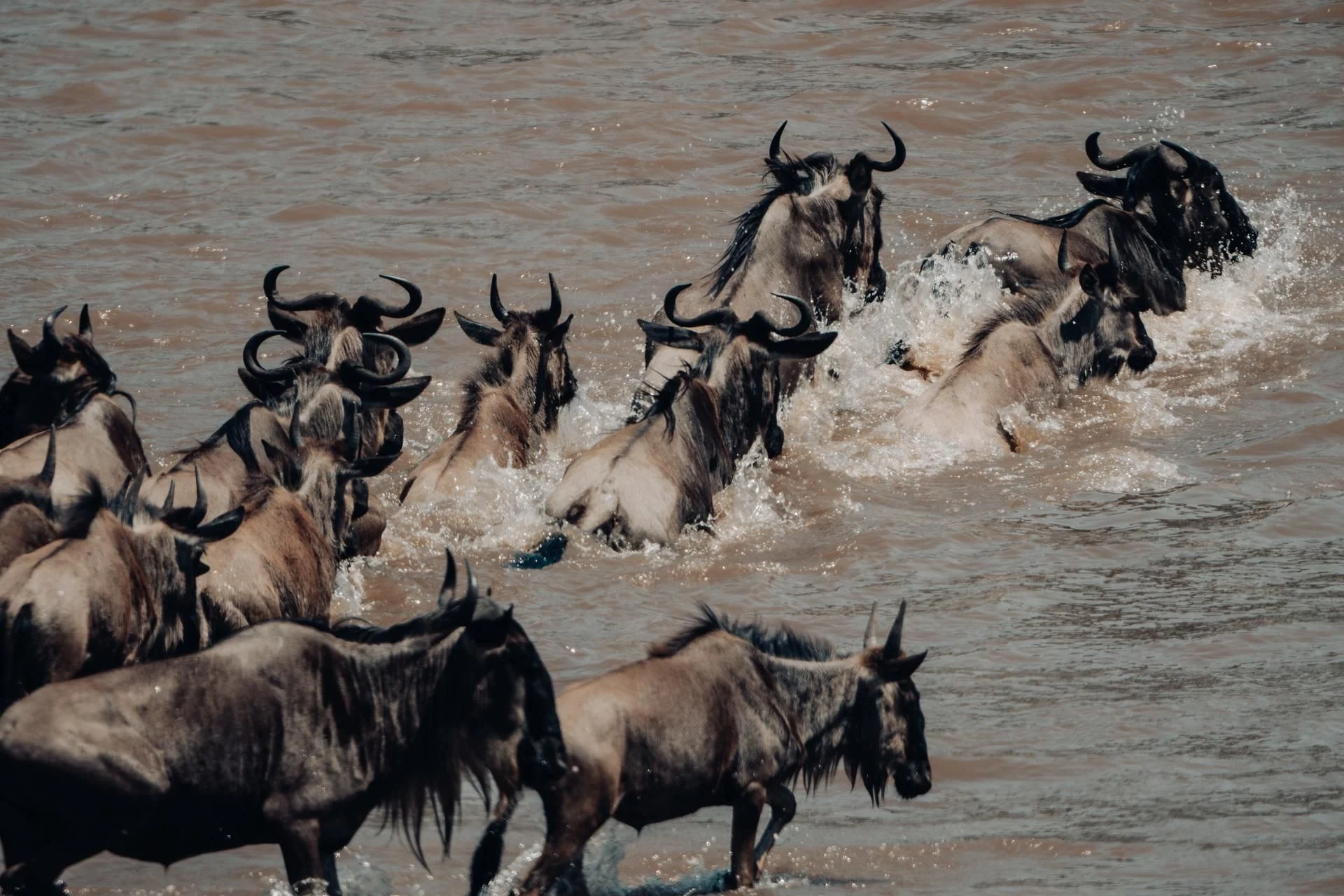
The Ndutu calving season photography provides you with the opportunity to tell the story of the Great Migration on two very different scales. One minute you’re looking across a plain alive with wildebeest. A little later, you see a lone calf falling behind its mother as she walks through the grass. Ndutu will give you enough time to photograph both.
Late January to February is a good time to consider for travelers looking for young wildebeest. Herds travel with the rain and the grazing, so they move around. Rather than hinge on a single morning, build in a few drives. If Ndutu is your main reason for coming to Tanzania, three or four nights is a good starting point for planning your itinerary.
You can go on this trip with a phone, a bridge camera, or a full wildlife photography kit. The kind of camera you choose determines the kind of picture you can take. In video, a phone can capture the sound and size of a herd passing by, and a long lens can help you focus on the behavior of one animal on the edge of it.
Best lenses for photography during Ndutu calving season.
A 100-400 mm zoom or similar telephoto is a good all-purpose main lens. It gives you reach for animals far away and enough flexibility to spread the frame when a second animal enters it. A 70-200mm lens is handy when the wildlife is within range and you want to keep more of the landscape in the shot. Use your phone or bring a wide-angle lens to capture storm skies, acacia silhouettes, and herds fading into the distance.
If you are deciding what to leave at home, think about what you can easily hold or support on a long drive. A heavy lens is nice to use when you’re standing still. It is clumsy if you have to swing it rapidly from side to side of the vehicle. If you have two camera bodies, utilizing a different lens on each will save time and reduce lens changes when conditions are dusty.
Protecting your gear during Ndutu calving season photography
Take a rain cover, a blower, a clean lens cloth and a bag that closes up completely. Keep the bag closed when driving through dusty areas and only change lenses when the vehicle is stopped and the air is clear. Bring spare batteries and memory cards, and ask the camp about charging equipment and when and where you can do it. If flying into Ndutu check the baggage allowance and bag requirements for the bush flight before deciding what gear to take.
What to ask about the safari vehicle
Check if you’ll be shooting through open sides, sliding windows, or a pop-up roof. Each one affects your shooting height and how you navigate around the vehicle. A pop-up roof can be helpful to see the herd. An open side or suitable window may make a lower angle more comfortable. Ask if there is somewhere to put a beanbag and where equipment can be safely stowed between sightings.
If there will be multiple photographers, ask how many can shoot from the same side without leaning across each other. For a private booking, ask if a seating layout with more working room can be arranged. If you need a lower boarding step or a handhold or a particular seat, get those details before you commit.
Build your trip around the way you photograph.
Live on the plains long enough to get the rhythm of the place. On the first drive, you might want to get your bearings and photograph the wider landscape. By the second morning you may have a better idea of where to wait, what light you like, and what behavior you want to follow.
Let Entale African Safaris know when you would like to travel, how many people will be shooting, and what equipment you’re bringing. We’ll help you choose a camp, organize your stay in Ndutu, and make sure the vehicle is ready for your group.

Entale Africsn Safaris
Sharing travel inspiration, destination knowledge and practical tips for exploring East Africa.