
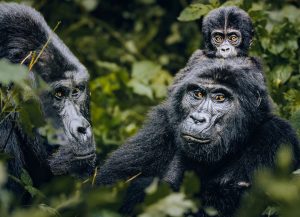
Amahoro Gorilla Family
Amahoro Gorilla Family; A gorilla trek does not need a dramatic show to be unforgettable. Sometimes it’s the moment that stays with you, a mother moving her baby or a silverback relaxing as the family eats nearby.
The name of the Amahoro gorilla family naturally evokes this quieter side of gorilla life. But its history also includes leadership changes and a split that helped spawn another recognizable family.
Learning about Amahoro before traveling provides context for your forest encounter. It invites you to look beyond the largest male and see the relationships among adults, mothers, and youngsters.
What is Amahoro?
Amahoro is “peace” in Kinyarwanda.
The name is memorable, but it should not be a promise that the family is always calm. Wild gorillas communicate, express and react to their situations. No surname determines its behavior during a visit.
History & Origins
Habituation began in March 1996, was interrupted in 1997, and led to tourism visits in 2000.
Amahoro, the original silverback, died in 2002. Later in the family’s leadership history, there was Ubumwe and Charles who became affiliated with the separate Umubano family.
These links point to the way the history of one family may help explain the origins of another.
Who is the leader of Amahoro?
The January 2024 conservation profile identified Gahinga as dominant silverback, following Ubumwe’s departure in June 2015.
Descriptions that continue to present Ubumwe as the current leader may be repeating older information. Leadership should be attributed to its record date.

Amahoro Gorilla Family
How Many Family Members Were Recorded?
members on 31 January 2024: 22 were recorded
- Four silverbacks.
- Seven adult females.
- Four subadult females.
- Three juveniles.
- Four infants.
Separate webpage counters were inconsistent with that narrative. These figures therefore provide historical context rather than a current census.
The recorded mixture of age groups is interesting for understanding family structure, although it cannot guarantee particular observations.
Location and Trekking Conditions
The Amahoro gorilla family is generally associated with the Bisoke area of Volcanoes National Park.
The approach may involve climbing, uneven ground, and thick vegetation. Rain can make footing more difficult, while changes in the gorillas’ location affect the distance.
The name “peace” describes the family’s identity; it does not mean an effortless walk.
What Visitors May Observe
Possible observations include feeding, resting, mothers maintaining close contact with infants, and youngsters moving among adults.
Watch how members share space and respond to one another. These small interactions can reveal more about family life than waiting exclusively for chest-beating or play.
Photography should follow the guide’s instructions without flash or attempts to attract attention.
Conclusion
The Amahoro gorilla family is one with an evocative name and an important history of leadership and separation. Its links with Umubano are especially interesting for understanding the development of Rwanda’s gorilla families.
A rewarding visit takes respectful observation and appropriate preparation. Historical membership numbers provide good background, but the daily conditions and official arrangements are what determine the real trekking experience.
Book your Rwanda gorilla safari with us at info@entaleafricansafaruis.com. Please tell us your preferred dates, number of travelers, type of accommodation, and mobility needs so that we can prepare a practical itinerary.

Entale Africsn Safaris
Sharing travel inspiration, destination knowledge and practical tips for exploring East Africa.